 Download slides
SKU rationalisation requires more efficient retail logistics
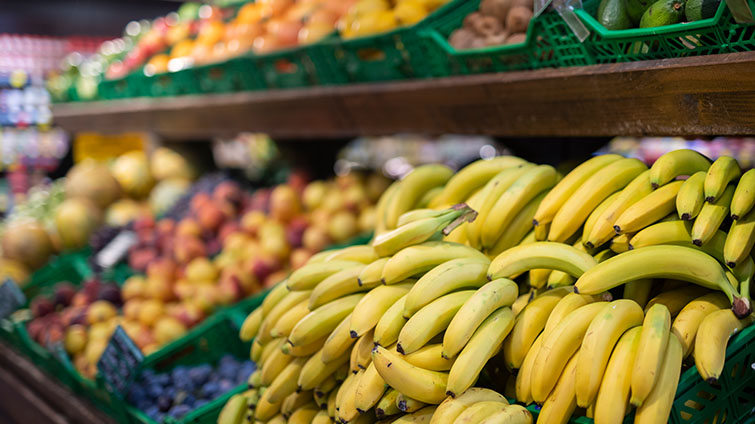
Fewer SKUs can help shops and shoppers alike
Retailers are cutting back on SKUs to improve margins. Leading up to the pandemic, the average supermarket carried between 30,000 and 35,000 SKUs, up from about 20,000 a decade earlier. Some grocers offered 50% more SKUs per linear foot than their mass and value competitors. Volatility in demand and thinning margins have since revealed the costs of unproductive assortments and duplicate products on shelves.
SKU rationalisation has re-emerged as a critical lever, especially as retailers combat inflationary pressures and demand normalisation post pandemic. Grocery retailers are reducing and refining the number of products to better manage their in-store merchandising and keep stock consistent, while delivering a positive shopping experience for customers.
What you need to know now
- With the right assortment, shoppers don’t feel as though their choices are limited. In fact, many report an improved shopping experience.
- As consumers look for new ways to stretch food budgets, promotions and seasonal buying periods might no longer perform the same way they have historically.
- Improving the quality of private label items could also provide flexibility to cut redundant national brands without losing sales.
- Artificial intelligence can be used to analyse SKU-level productivity and demand elasticity by modelling substitution behaviour.
The logistics takeaway
A logistics provider with specific retail expertise can help you to manage smaller deliveries efficiently, so the right products are in the right locations. Centralised purchase-order management and item-level visibility can help to manage SKUs in real time and quickly reroute even small amounts of inventory to where it sells best.
Beyond lay-away: Return rates are higher for buy now, pay later
More shoppers are turning to buy-now, pay-later options. What was once traditional lay-away has evolved into a set of sophisticated services that offer short-term, interest-free instalment plans. These programmes have grown across both in-store and online shopping experiences, growing by 13% to over $560 billion globally in 2025. By 2027, it’s expected that over 900 million consumers will have used buy now, pay later.
What the data shows
- Average order value for purchases using buy now, pay later go up by 20-40%. These programs also increase the shopper conversion rate—from “just looking” to making a purchase.
- The programmes are no longer mainly used for expensive items like traditional lay-away plans were, but more often for everyday purchases.
- These programs come with higher credit risk. Roughly 30-40% of users miss payments. Among Gen Z shoppers, that figure rises to 51%. These downsides raise concerns about the long-term viability of buy now, pay later.
The logistics takeaway
Retailers face operational challenges with these transactions because of higher return rates and complicated chargeback management. Companies that leverage buy-now, pay-later programmes should evaluate and improve their reverse logistics strategy and plan for seasonal return spikes, for instance around the December holidays.
U.S. Supreme Court strikes down some tariffs
The U.S. Supreme Court has ruled tariffs imposed under the International Emergency Economic Powers Act (IEEPA) were unlawful. The ruling brings those duties to an end but leaves key questions unresolved, most notably on potential refunds.
New tariffs under other legal authorities are widely expected. The administration has instituted a temporary 10% tariff under Section 122 of the 1974 Trade Act. This tariff is limited to 150 days unless an extension is granted by Congress. The administration has signalled it will replace it with permanent tariffs under Section 301.
Section 122 tariffs are added to other existing tariffs, but there are exceptions for books, certain electronics and some foods such as beef, tomatoes and oranges. Products that are currently subject to Section 232 tariffs, including steel and aluminium, are excluded. However, if only part of a product is subject to section 232, Section 122 may still apply to the non 232 portion.
Supply chain leaders should avoid making sourcing decisions based on the ruling and instead stay focused on proven resilience strategies, including diversifying sourcing and using trade programmes where available. One important way to build resilience is by creating a sourcing hierarchy with suppliers from different countries and or regions. The hierarchy should prioritise suppliers based on geopolitical realities, business continuity and cost efficiency. A first step toward achieving this is dual sourcing: your current supplier plus a backup in a different country.
While focusing on proven resilience strategies is critical, there are ways to preserve your right to potential refunds:
- Review current customs entries, especially those nearing key deadlines.
- For closed (liquidated) entries, file a protest within 180 days of the liquidation date.
- For open entries, continue to monitor for a liquidation date to take appropriate action.
- Consider keeping in touch to a trade solicitor to discuss if any legal filing should be made with the Court of International Trade.
- Use tools such as U.S. Tariff Impact Analysis, ACE Import Intelligence and U.S. Customs Analytics to make informed decisions.
 Actionable freight insights