 Download slides
Gateway performance shapes March port and drayage outcomes
Notable shifts this month
North American port and drayage conditions remain stable, with localised execution risk
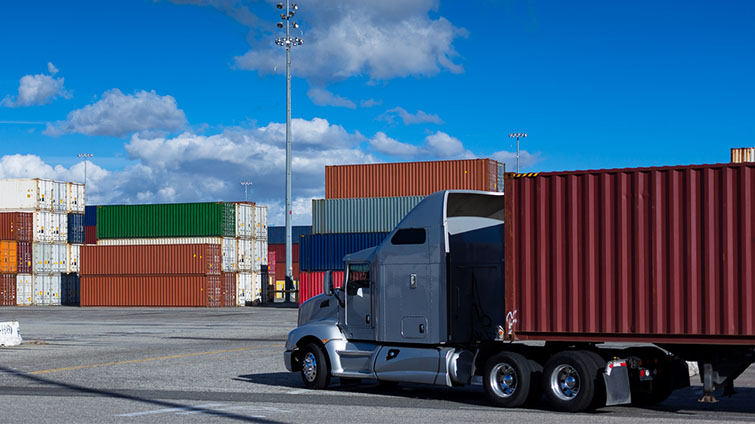
Port operations in the United States enter March without broad disruptions, but drayage outcomes continue to vary by gateway. Equipment positioning, rail interfaces and regional labour dynamics remain the primary variables affecting inland execution, reinforcing the need for early planning and flexibility even in otherwise stable conditions.
South America ports show increasing sensitivity to schedule discipline
Across the region, port performance remains broadly stable but increasingly dependant on berth-window adherence. In Brazil, Santos continues to operate reliably for on-window arrivals, while vessels arriving outside their window face longer wait times and elevated rollover risk—a pattern also evident at Itapoá, Paranaguá and Navegantes.
As networks normalise after Lunar New Year, exporters should prioritise sailings with stronger schedule integrity rather than assuming uniform port performance.
Chile port performance reflects dispersion rather than systemic strain
San Antonio continues to execute reliably, including on roll-on roll-off volumes, while nearby gateways such as Valparaíso experience more moderate delays. Exporters, particularly those moving perishables or time-sensitive cargo, may benefit from validating cutoff times, refrigerated container availability and inland handoffs by port rather than assuming uniform performance.
Colombia operations remain sensitive to inland and terminal co-ordination
Operational controls at Buenaventura highlight the port’s sensitivity to inland and terminal constraints. Cartagena continues to perform as a resilient hub, though carrier rotation changes elsewhere in the network may affect feeder timing and transshipment reliability into Colombia as March progresses.
Peru continues to gain prominence as a regional hub despite regulatory uncertainty
As connectivity builds around Chancay, expect greater consolidation through this gateway, while Callao continues to differentiate through faster direct Asia services. March planning should weigh the tradeoff between broader network reach and transit speed when selecting routings.
Key takeaways
- Gateway selection is becoming a more active planning consideration
March outcomes may vary meaningfully by port and service, so confirming primary gateways and identifying alternates earlier in the booking process may help to reduce execution risk. - Routeing decisions increasingly reflect trade-offs rather than clear hierarchy
Expanded hub connectivity and faster direct services can carry different execution considerations, making alignment with inventory tolerance and inland flexibility more relevant. - Inland execution details may warrant earlier co-ordination
Drayage outcomes continue to depend on equipment positioning, rail interfaces and cutoff discipline, meaning earlier visibility can help limit downstream adjustments. - Additional lead time may help where flexibility is limited
When alternate ports, services or inland options are constrained, a scheduled buffer can help to mitigate localised disruption risk.
 Actionable freight insights